
What Doesn’t Thrive Teaches You Everything. A Fresh Start in the Orchard.
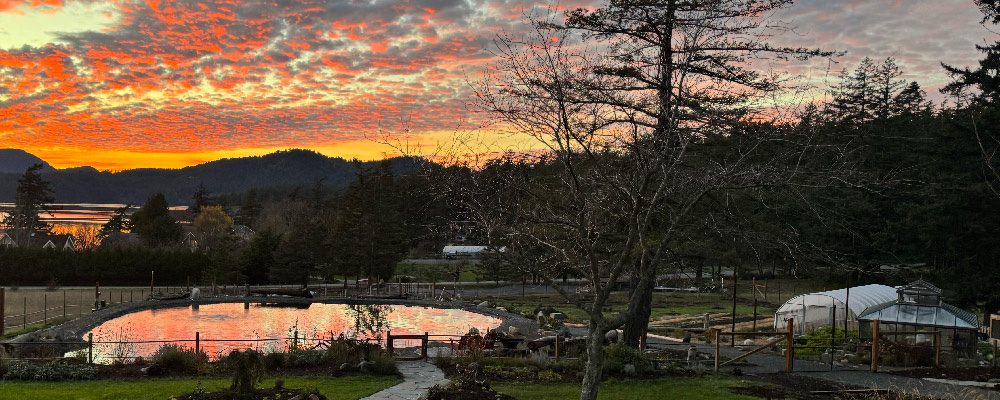
What Doesn’t Thrive Teaches You Everything. A Fresh Start in the Orchard.
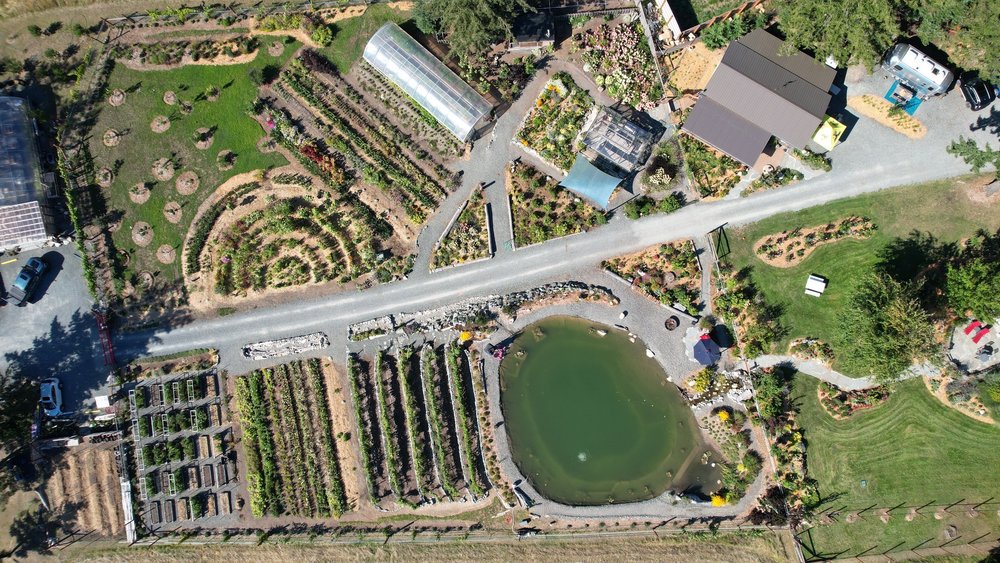
What Doesn’t Thrive Teaches You Everything: A Fresh Start in the Orchard
There’s a particular kind of honesty that February demands on a farm. The trees are bare, the ground is saturated, and there’s nowhere to hide. You see things clearly that the lushness of summer allowed you to overlook.
This February, Allan and I walked our orchard with clear eyes and made some hard calls.
We have a beautiful piece of ground, but parts of it are genuinely boggy. In winter, water sits. It doesn’t drain so much as linger — and fruit trees, most of them anyway, do not forgive wet feet. A waterlogged root system can’t breathe, can’t take up nutrients, and slowly declines. You keep waiting for the tree to turn a corner. Sometimes it does. Often, it doesn’t.
We had several trees in that category. Not dead, exactly, but not thriving either — thin growth, poor color, little to no fruit. Trees that had been trying for a few seasons and simply couldn’t get traction in soil that stayed wet too long.
So we made the decision to pull them.
Some went to the compost pile. A few we relocated — replanted on higher, drier ground to give them a second chance in conditions they might actually succeed in. We won’t know for a season or two whether the move saves them, but it felt worth trying. There’s something to be said for not giving up on a struggling plant, as long as you’re honest about why it was struggling in the first place.
With the space cleared, we did what any farmer does when there’s an empty patch of ground — we started dreaming about what to put in it.
“There’s something to be said for not giving up on a struggling plant, as long as you’re honest about why it was struggling in the first place.”
Choosing Trees That Match the Land
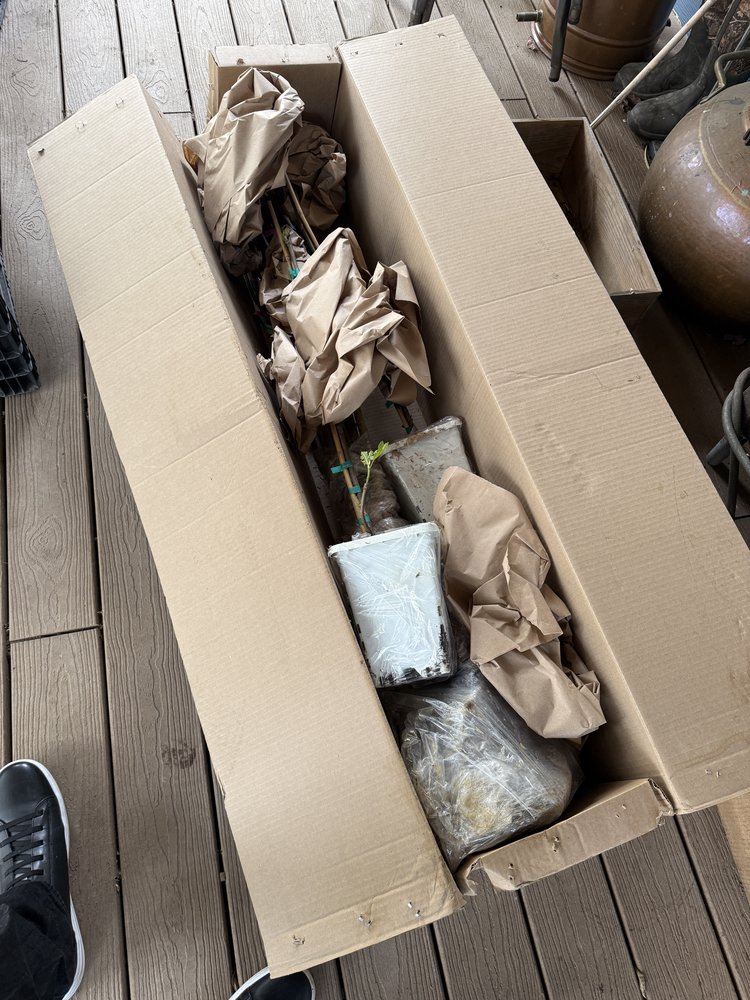
The arrival. Eight trees from Rain Tree Nursery, each chosen specifically for our conditions.
This time around, we weren’t just picking trees we loved. We were picking trees that could genuinely succeed in our conditions. Every variety we chose has meaningful tolerance for heavier, wetter soils — and then we’re going to give them every additional advantage by planting each one on a mound, so the roots sit just high enough to drain freely even when the surrounding ground is saturated.
We turned to Rain Tree Nursery for all of them — one of our favorite sources for unusual, well-suited varieties for the Pacific Northwest.
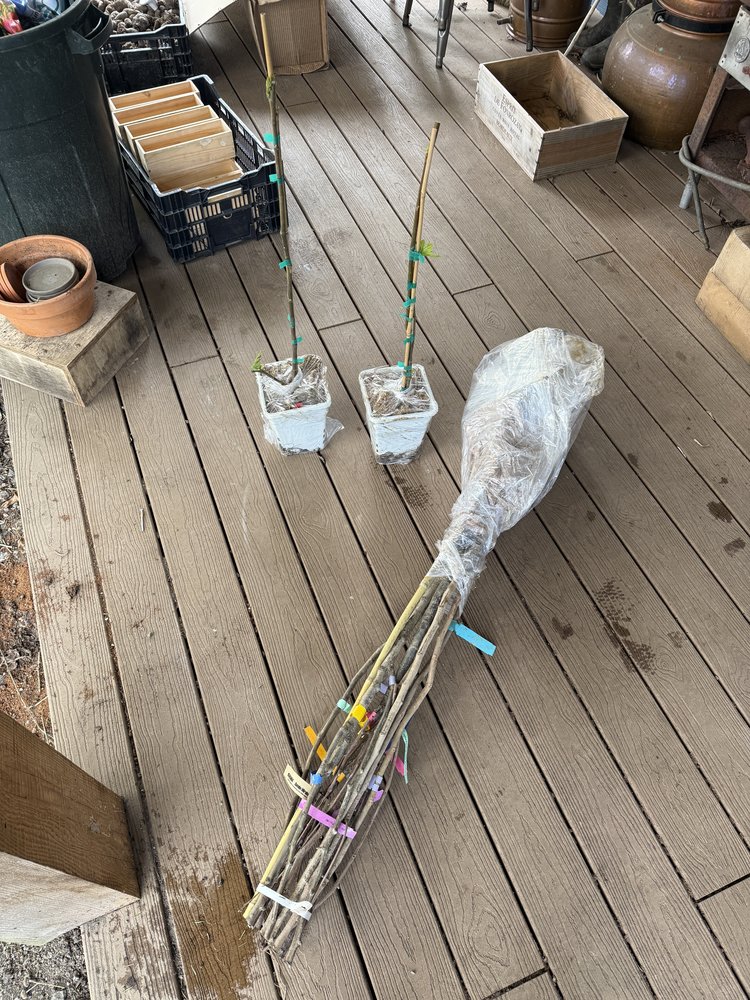
Eight new trees laid out and identified — each one chosen for its tolerance of our boggy ground.
Here’s what arrived — and what we invested. Planting trees is a real investment, and I think of it exactly that way. These aren’t impulse purchases. They’re a bet on the future of this land.
Our new trees from Rain Tree Nursery — all selected for wet-soil tolerance:
How We Planted Them: The Full Process
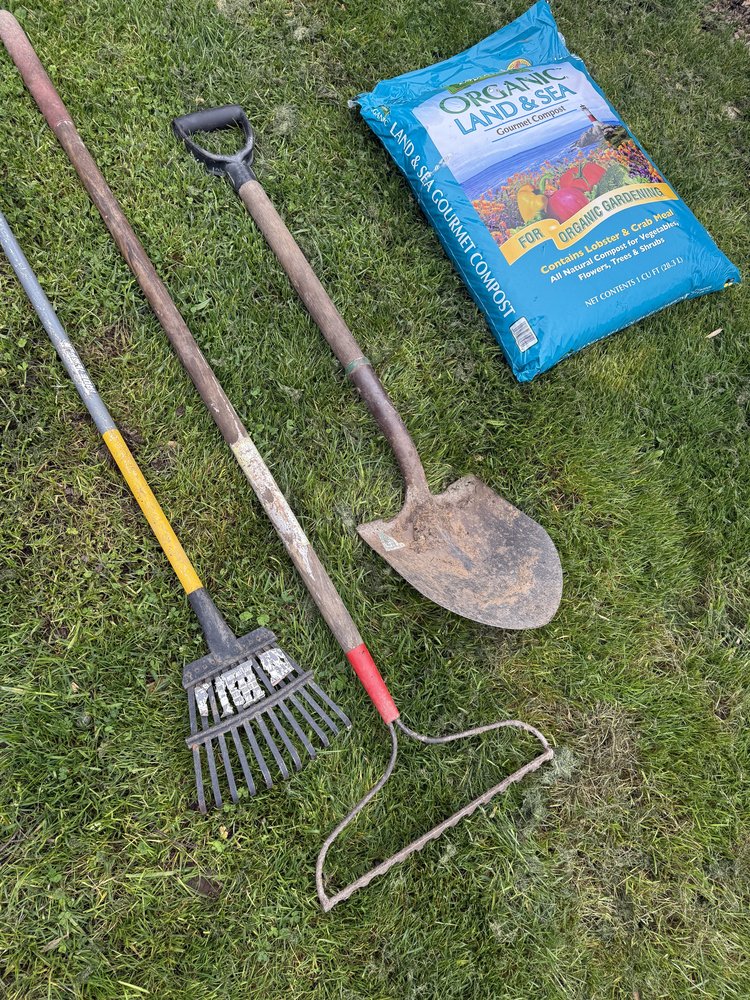
The Sunday kit: shovel, rakes, Dr. Earth Organic Landscaper’s Mix, and a lot of intention.
Getting trees in the ground correctly is where most people lose their investment. The preparation matters as much as the planting itself. Here’s exactly what we did.
Soak the roots for 24 hours
Before anything goes in the ground, every bare-root tree got a full 24-hour soak in water mixed with seaweed powder. Seaweed is remarkable — packed with trace minerals, natural growth hormones, and compounds that actively reduce transplant shock. One of the highest-return steps you can take, and one of the most skipped.
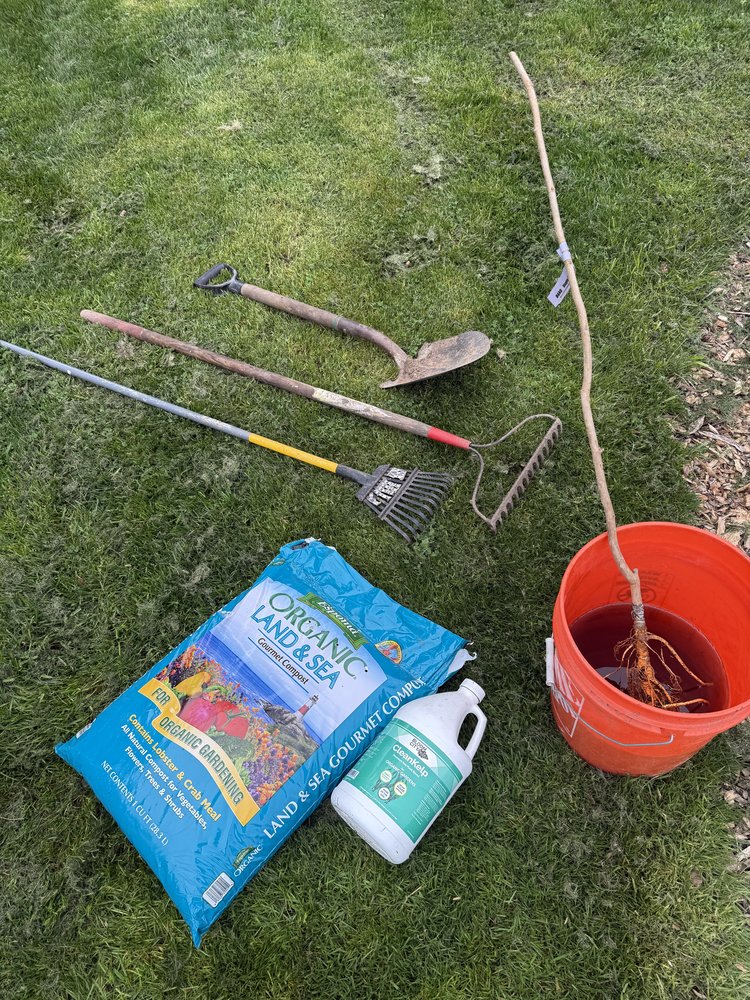
The 24-hour seaweed soak. Every bare-root tree gets this before anything else.
If you’re not ready to plant right away, bare-root trees can stay in their original packaging for up to 10 days from shipping. After that, heel them in — lay them on their side and cover the roots with soil — or pot them up temporarily. Keep them somewhere cool. Never in a warm house. I think of what we used to do with our Christmas tree every year: keep it inside in the warmth for weeks, then put it out in the cold. Shocked. Trees feel that same thing.
Dig wide, not deep
We used Dr. Earth Organic Landscaper’s Mix for soil amendment. The hole needs to be twice as wide as the root system, but only as deep as the roots themselves. Wide encourages roots to spread into loosened soil. Too-deep buries the graft.
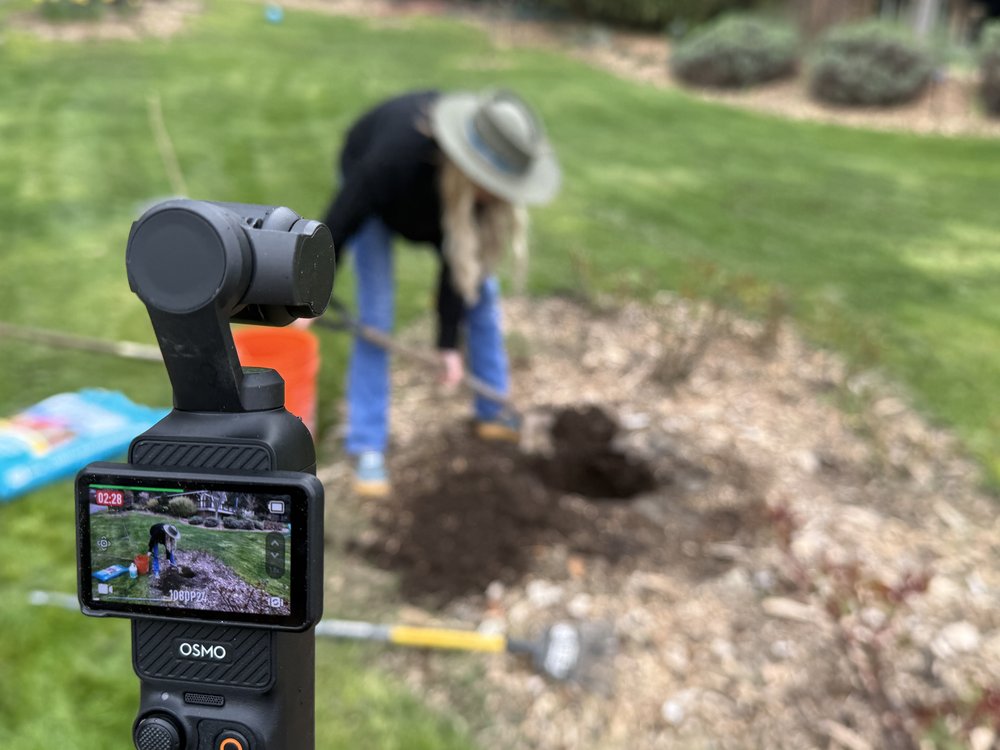
Digging the hole — twice as wide as the roots, same depth. We filmed the whole process on the Osmo.
Inspect and trim before you plant
Take a moment with every tree. Look at every root. Trim off anything broken or damaged. A clean cut heals; a ragged one invites disease.
Amend thoughtfully
We mix a modest amount of compost back into the native soil — not a lot, just enough to give the roots something to work with — along with a dusting of mycelium powder. Mycorrhizal fungi form a relationship with tree roots that dramatically expands their ability to take up water and nutrients. One of the most important things you can add and one of the least talked-about.
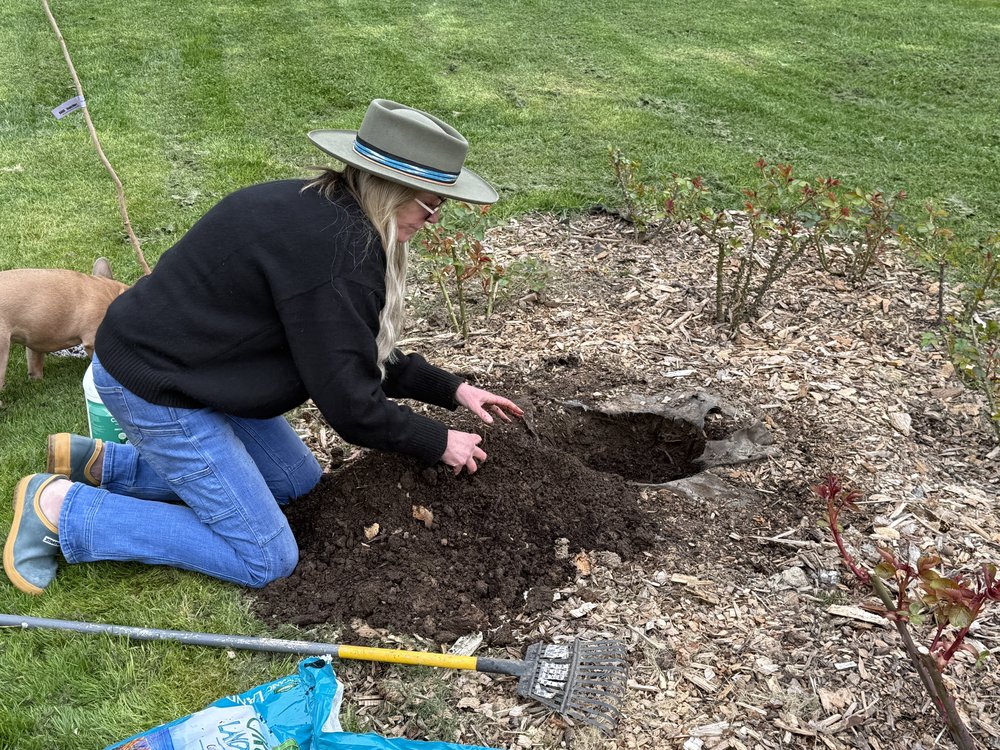
Working Dr. Earth and mycorrhizal powder into the native soil. Hands in the dirt — the best way to do it.
Mind the graft
Every grafted tree has a graft union — a slight knob or change in bark texture near the base. That union needs to sit at least two inches above the soil line. The tree will settle as you water it in, so plant it a touch high rather than a touch low.
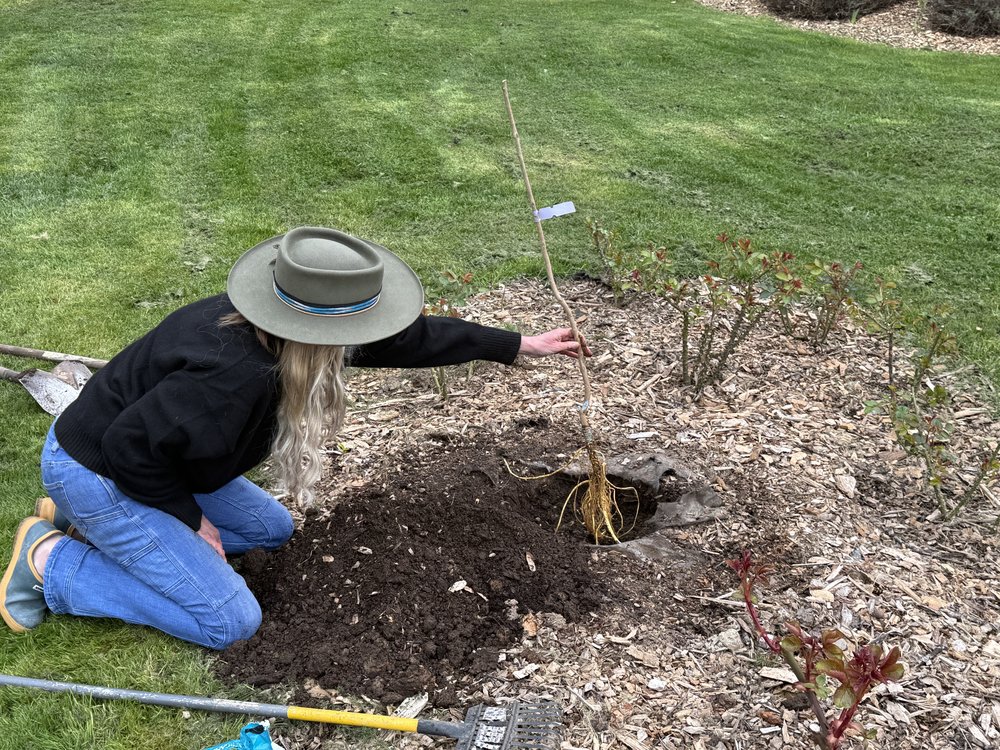
Placing the tree and checking the graft union — it needs to sit at least two inches above grade.
Mound it
Because our ground holds water, we planted each tree on a slight mound — raising the root zone just enough to ensure drainage even when the surrounding soil is saturated. This one adjustment makes an enormous difference in wet-soil conditions and is one of the most important decisions we made this season.
Mulch well
We use the nursery packing material first — it’s already there, so put it to work — then layer wood chips on top. Keep mulch a few inches away from the trunk. Mulch against bark invites rot and pests.
Water in generously — and keep watering
We drenched each tree with compost tea at planting. After that, the target is one inch of water per week — roughly half a gallon per square foot of root zone. For a new tree with about a two-square-foot root ball, that’s two gallons a week. And here’s something worth knowing: a light Pacific Northwest drizzle does not count as watering your tree. A typical grey-sky day? The roots aren’t feeling it. Water your trees intentionally.
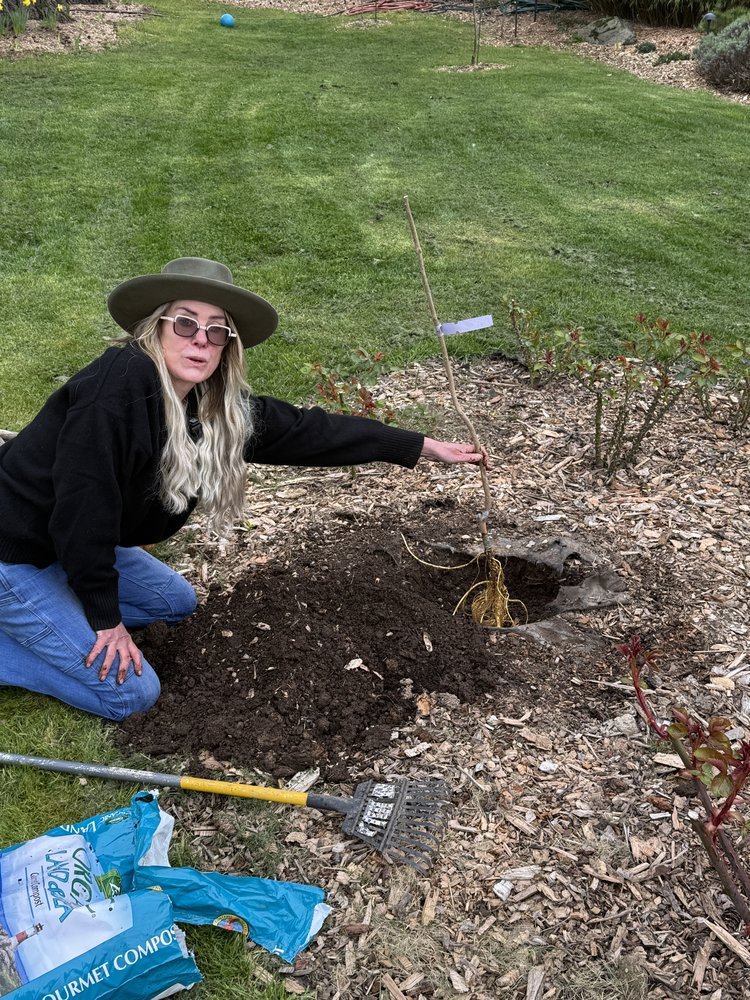
There is always a moment like this when you’re planting trees.
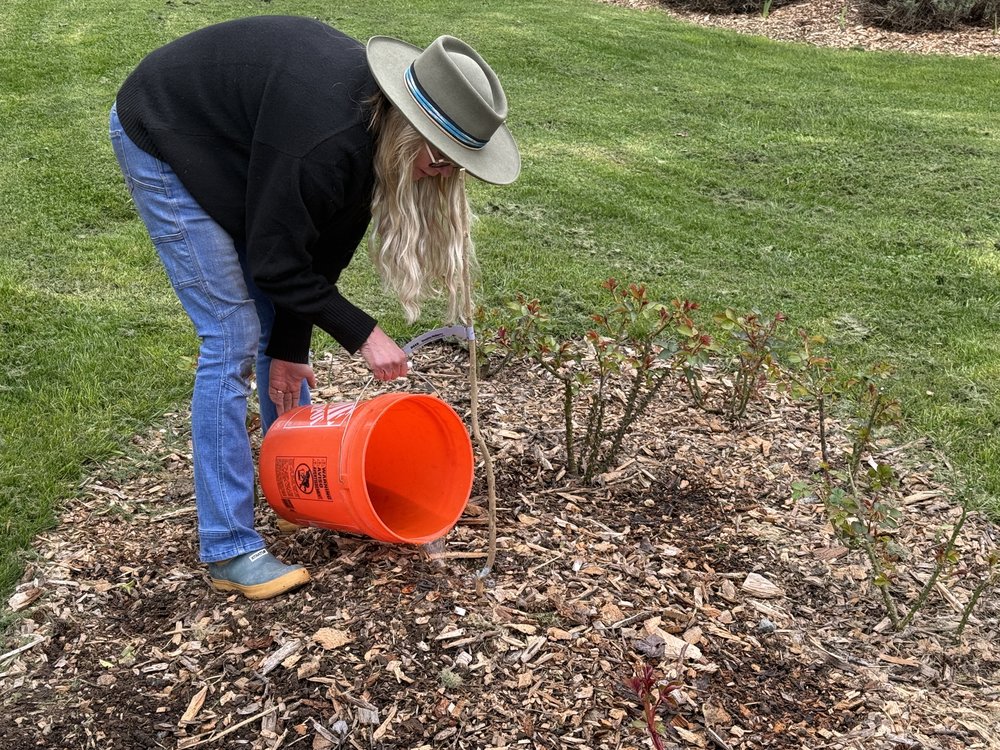
The first watering — compost tea, generously applied.
There’s something quietly hopeful about planting trees. You’re making a decision today whose full reward won’t come for years. You’re betting on the soil, on the seasons, on your own willingness to show up and pay attention.
We’re betting on these eight. Come back in the fall — I’ll let you know how they’re doing.
Questions about planting fruit trees in the Pacific Northwest? Leave a comment below — I’d love to hear what you’re growing.
